
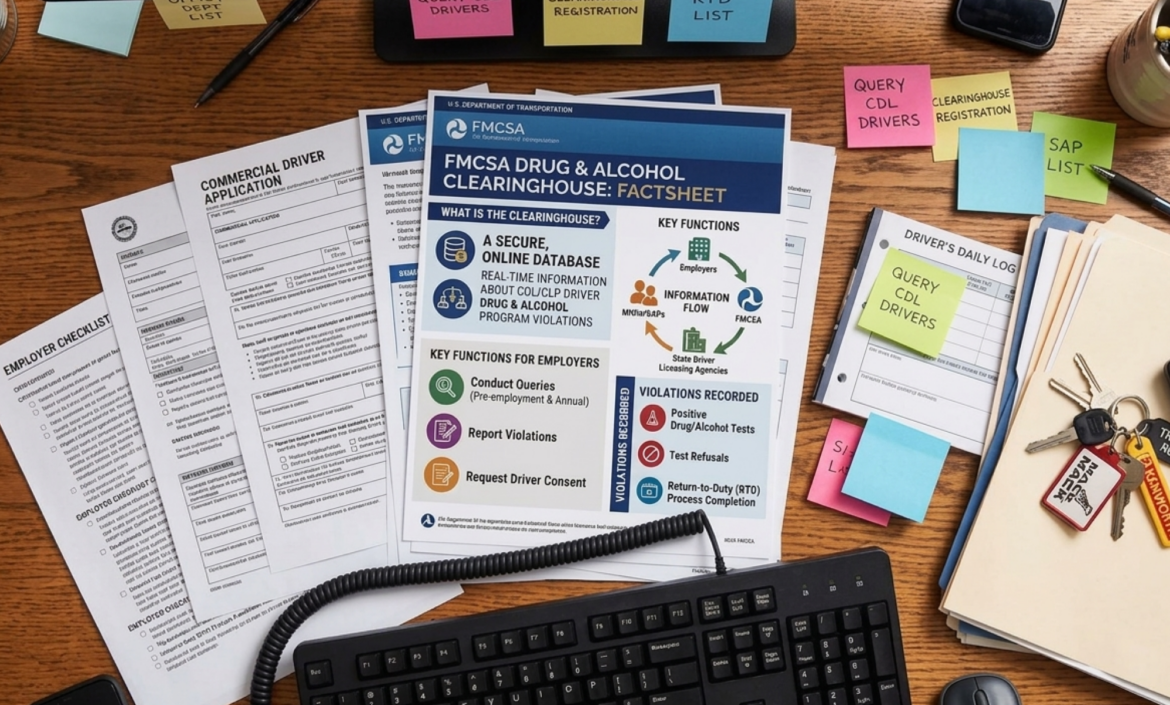
Driver qualification files help commercial fleets document that each driver meets applicable requirements to operate a commercial motor vehicle. For small fleets, maintaining these files can become difficult when hiring paperwork, annual reviews, medical records, and renewal dates are managed across spreadsheets, inboxes, and paper folders.
Understanding driver qualification file requirements is an important first step. The next is creating a repeatable process that keeps records complete, current, and accessible as drivers and requirements change.
Understand what a driver qualification file contains.
Under 49 CFR 391.51, motor carriers generally must maintain a driver qualification file for each driver they employ. The file documents how the fleet evaluated and continues to monitor the driver’s qualifications.
Depending on the driver and the fleet’s operations, required records may include:
- The driver’s completed employment application
- Motor vehicle records obtained during the hiring process
- A road test certificate or an accepted equivalent
- Annual motor vehicle record inquiries
- Documentation of the annual driving record review
- Applicable medical qualification documentation
- Medical variances or Skill Performance Evaluation certificates, when required
- Verification related to the medical examiner’s National Registry listing, when applicable
FMCSA provides a driver qualification file checklist to help fleets understand minimum documentation and retention expectations. Requirements can vary based on driver type, licensing status, exemptions, and operating circumstances, so fleets should review the applicable regulations for their operations.
Keep driver qualification files current.
A driver qualification file is not a one-time hiring packet. Several records must be added, reviewed, renewed, or replaced throughout the driver’s employment.
For example, fleets generally must conduct an annual inquiry into a driver’s motor vehicle record and document the annual review. Medical qualification records and certain variances may also have expiration dates that require attention. Federal rules include specific retention periods for different documents, including provisions allowing some records to be removed three years after execution.
This creates an ongoing administrative cycle:
- Collect the correct documents during hiring.
- Confirm that each record is complete and valid.
- Track annual reviews and expiration dates.
- Update the file when a driver’s information changes.
- Retain records for the required period.
- Make documentation available when requested.
In a fleet with a lean administrative team, even a small number of drivers can create dozens of dates, documents, and follow-up tasks. A clear workflow helps prevent routine responsibilities from becoming last-minute problems.
Reduce audit risk from missing or outdated records.
During a compliance review, having completed a task may not be enough. The fleet must also be able to produce the supporting documentation.
Missing records, expired documents, incomplete annual reviews, or files stored in different locations can make it harder to demonstrate that driver qualification responsibilities were handled appropriately. FMCSA guidance notes that motor carriers must maintain a qualification file for every employed driver and identifies 49 CFR 391.51 as the source for document and retention requirements.
Common file management risks include:
- A medical document expires without the fleet noticing.
- An annual motor vehicle record inquiry is completed but not filed.
- A driving record review is missing the reviewer’s name or date.
- Hiring documents remain in an email inbox instead of the driver’s file.
- Records cannot be located quickly during a review.
- Different team members rely on separate spreadsheets or calendars.
These issues often reflect a workflow problem rather than a lack of effort. Centralizing records and assigning clear follow-up responsibilities can give small fleets better visibility into what is complete and what needs attention.
Connect driver files to ongoing compliance management.
Driver qualification files are one part of a broader driver compliance process. Hiring, onboarding, annual reviews, medical qualifications, drug and alcohol program responsibilities, and other driver records may involve separate deadlines and documentation.
FleetDrive 360, a PrePass® Compliance solution, helps fleets manage driver qualification files, hiring and onboarding, accident records, and drug and alcohol program tasks in a centralized compliance platform. Fleets can organize records, monitor deadlines and alerts, and see which items may require action.
For a fleet manager wearing several hats, that centralized view can make ongoing compliance work easier to manage. Instead of relying on memory or checking several systems, the team can establish a consistent process for collecting documents, tracking dates, and addressing outstanding tasks.
FleetDrive 360 does not replace a fleet’s responsibility to understand and follow applicable regulations. It supports the day-to-day organization needed to manage those responsibilities more consistently.
Frequently asked questions.
How long must a fleet keep driver qualification records?
Retention periods depend on the record. A driver qualification file generally must be maintained while the driver is employed and for three years afterward, while certain individual records may be removed three years after their execution date. Fleets should consult 49 CFR 391.51 for the requirements that apply to each document.
Can driver qualification files be stored electronically?
The regulations focus on maintaining and producing the required records rather than requiring a paper-only system. Fleets using electronic records should make sure documents remain secure, legible, organized, and available when needed.
Are owner-operators responsible for driver qualification files?
An owner-operator operating under their own authority generally must comply with the rules that apply to both motor carriers and drivers.
Make driver compliance easier to manage.
Driver qualification files require more than document storage. They require an ongoing process for tracking records, reviews, expiration dates, and follow-up work.
See how FleetDrive 360 can help your fleet organize driver compliance responsibilities and keep important tasks visible.