
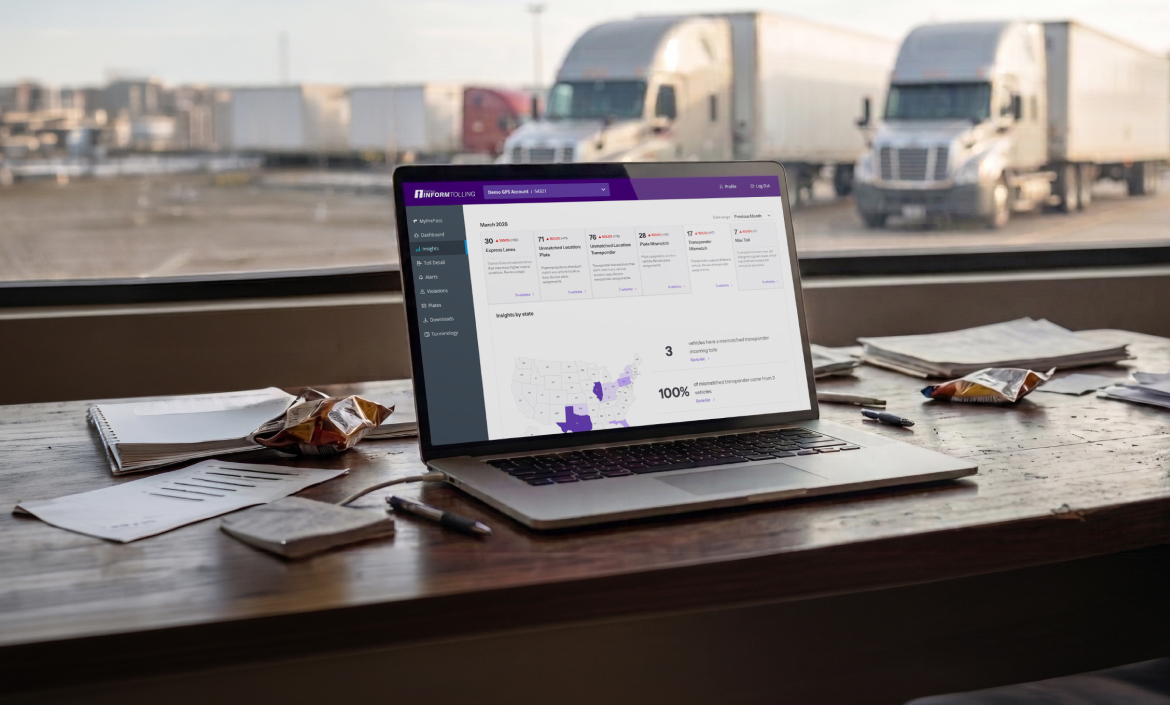
More toll data doesn’t help with better decisions. In fact, the sheer volume of toll transactions, GPS records, routing data, and billing information can make it harder to identify what matters most. Hidden within thousands of monthly transactions are costly issues, such as overcharges, mismatched vehicles, and billing errors, that often go unnoticed. The real value isn’t in collecting more data. It’s in surfacing the right insights so fleets can take action before small issues become expensive problems.
Why manual review misses the costly patterns.
Every toll transaction generates valuable information. Toll reports, agency invoices, GPS tracks, vehicle records, and driver activity each provide part of the picture. The challenge isn’t collecting more data. It’s connecting that information to uncover the issues that matter most.
A toll transaction tells you a vehicle was charged, but it doesn’t reveal whether the charge was accurate, whether the correct vehicle was identified, or whether the same issue is occurring across your fleet. Finding those answers often requires comparing information across multiple systems and manually reviewing hundreds or thousands of transactions.
As your fleet grows, that manual review becomes increasingly difficult. Issues that seem minor on their own, such as overcharged tolls, transponder mismatches, or maximum toll charges, can quickly add up when they occur repeatedly across the fleet.
AI Toll Insights automatically analyzes your toll data, identifies recurring issues, and highlights the transactions that deserve attention first. Instead of searching through thousands of records, your team can quickly focus on the opportunities to reduce costs, recover overcharges, and improve operational efficiency.
The cost of missing the pattern.
Not every issue hits the budget right away. The costliest toll issues are often the hardest to detect. They build up inside routine activity:
- Express-lane usage.
A single express lane charge may be justified. But when the same vehicle repeatedly uses premium lanes where lower-cost routes are available, those small charges quietly add up over weeks and months. Without seeing the pattern, unnecessary toll spend becomes part of normal operating costs.
- Transponder and plate mismatches.
A mismatch can look like a simple administrative error. Left unresolved, it creates inaccurate reporting, makes toll charges harder to reconcile, and forces administrative teams to spend more time investigating exceptions instead of managing the business.
- Unmatched location events.
When GPS data doesn’t place a vehicle where a toll charge occurred, it’s worth investigating. A single event may be an exception, but recurring mismatches can point to plate misuse, unauthorized activity, or billing errors that continue generating unnecessary costs until they’re found.
- Max toll charges.
Toll agencies may apply the maximum rate when entry or exit information is missing. One time may not seem significant, but repeated max toll charges can increase costs and may be charges your fleet could dispute or recover.
None of these are the biggest line items on the invoice. They’re the small charges that repeat without anyone noticing.
Turn toll data into action.
Toll management has traditionally asked teams to go looking for problems, working backward from a report, an invoice, or a complaint. That’s where AI Toll Insights within INFORM™ Tolling changes the process.
AI Toll Insights uses AI-driven analysis of your toll transactions alongside GPS and vehicle data to find recurring patterns that are easy to miss during manual review. It gives you context to quickly find the activity that deserves attention.
Instead of your team hunting through thousands of transactions, it highlights recurring patterns such as unmatched location events, plate and transponder mismatches, unexpected express lane usage, max toll charges, and out-of-route activity so your team can focus on the transactions most likely to affect costs.
Early detection helps fleets resolve issues faster and reduce unnecessary costs. By identifying recurring issues before they spread across your fleet, you can avoid unnecessary expenses, spend less time on manual investigations, recover overcharges more quickly, and improve operational efficiency. Instead of reacting after problems affect your bottom line, your team can address them early and take action before they become recurring expenses.
Toll management is turning into a prioritization problem.
Toll data will only grow, with more transactions, more routes, more agencies. The fleets that come out ahead won’t be the ones sitting on the most data. They’ll be the ones who can look at it and immediately identify what needs attention and what’s driving costs.
A new report or spreadsheet was never the answer to that. What helps is turning the data you already have into a short list of things worth doing something about. Your toll records stop being a log of what already happened and start shaping what happens next.
Fleets don’t need another report. You need confidence that you’re focusing on the transactions that matter most. When AI helps prioritize the issues worth investigating, toll data becomes more than a record of past activity. It becomes a tool for controlling future costs.
See how AI Toll Insights within INFORM™ Tolling turns toll transaction data into clear, actionable intelligence. Help your fleet find the transactions that need attention, cut unnecessary costs, and make better decisions. Talk to a toll expert to learn more.