
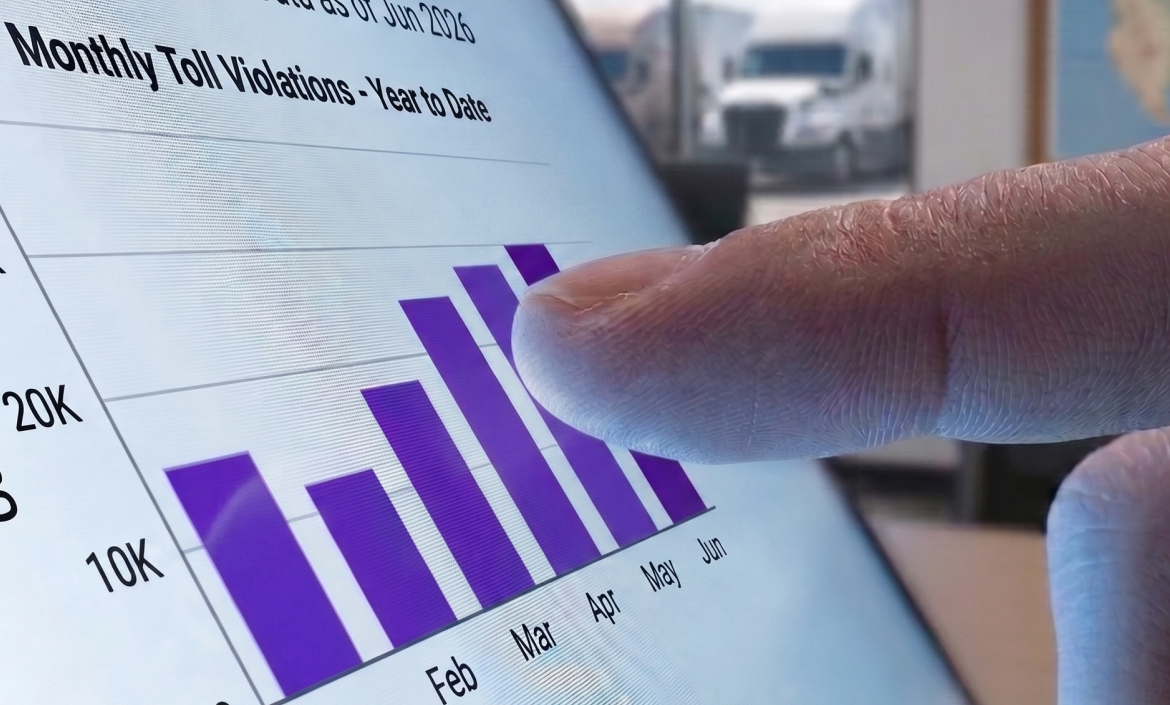
Every month, the expense review tells a familiar story. Most of your costs make sense. Fuel tracks with miles, maintenance with equipment age and use, and labor and insurance stay steady. Then you get to toll spend, and the number is higher than expected.
The first assumption is usually higher toll rates. Sometimes that’s right. But just as often, rising toll costs come from how your fleet runs day to day, in ways that are hard to spot on an invoice. Toll management is growing more complex, and visibility is now much more valuable. The challenge isn’t knowing how much you spent. It’s understanding why.
Higher toll rates are only part of the story.
Toll costs are climbing across the country, and rates are one of the reasons. Many toll agencies continue to raise prices to fund infrastructure projects and ongoing maintenance. At the same time, toll networks keep expanding. As new toll roads, managed lanes, and express corridors open, your fleet simply has more places to incur charges than you did a few years ago. Dynamic pricing adds another layer, with variable rates that shift based on traffic, route, and time of day.
Those increases are easy to point to, but they don’t explain everything. Consider two fleets running similar routes in the same region under the same published rates. One sees a manageable, predictable toll bill. The other watches its toll spend creep up month after month. The difference usually isn’t the rates. It’s everything an invoice leaves out.
Common causes of rising toll costs.
When your toll spend rises faster than rates do, the cause is often hiding in day-to-day operations. A few patterns show up again and again.
- Express lane usage. Express lanes can shave time off a trip, but that speed comes at a premium. Without a clear view of who’s using them, simple questions go unanswered. Which vehicles take express lanes most often? Does that usage line up with company policy? Do the time savings justify the added cost? Across a large fleet, those premiums become a significant expense.
- Out-of-route activity. Detours, last-minute route changes, and driver preferences all send vehicles onto toll roads they didn’t need to take. A single extra charge looks insignificant. Multiply it across hundreds or thousands of trips, and it becomes a measurable cost on your monthly bill.
- Transponder mismatch and plate mismatch. When a transponder is moved between vehicles or a plate is assigned to the wrong truck, charges land on the wrong vehicle. That means inaccurate toll reporting, misallocated costs, and extra reconciliation work for your team. Your spend may not jump right away, but it gets much harder to see where your costs are coming from.
- Max toll charges. In some cases, a toll agency applies the maximum rate when entry or exit information is missing. These charges happen for many reasons, making it worth confirming the correct rate was applied. Otherwise, you can pay more than you should and never know why.
- Incorrect or duplicate charges. Most toll transactions process correctly. But with thousands flowing through every month, even a small error rate matters. Duplicate charges, incorrect classifications, and charges that don’t match actual travel are hard to catch one at a time. Together, though, they quietly raise what you pay.
Why these issues are hard to find.
The problem usually isn’t a lack of data. You already have plenty of it: toll transactions, vehicle records, GPS data, driver records, and billing reports, all sitting somewhere in your operation.
The hard part is connecting those sources into a clear picture of what’s happening. And that only gets harder as your fleet grows. A large operation can generate tens of thousands of toll transactions in a single month, spread across multiple toll agencies, each with its own format and billing cycle. Finding one discrepancy in that volume is possible. Spotting patterns across thousands of transactions is a completely different challenge.
The questions that matter most are also the hardest to answer by hand. Pinpointing where max toll charges keep showing up, for example, can take hours of manual review. The issue isn’t data availability. It’s turning that toll data into something your team can act on.
Moving from reactive to proactive.
For many fleets, toll management begins when the invoice arrives. By then, the charges have already been incurred, and your team is working backward to understand what happened. You’re always a step behind.
There’s a better way to work. Instead of running manual reviews after the bill lands, you can flag issues as they happen and act on the trends that matter. That’s where toll management stops being a monthly cleanup task and becomes a source of fleet cost control.
Get the visibility and control to manage your toll spend instead of simply paying invoices. Start uncovering hidden costs, validating charges, and identifying opportunities to reduce operational inefficiencies. PrePass® Toll Management brings toll activity from multiple agencies into one place, giving you a single view of charges, disputes, and trends through INFORM™ Tolling. GPS Toll Verification helps validate when and where toll charges occurred using your route and GPS data, while AI Toll Insights within INFORM Tolling connects toll, GPS, and vehicle data to surface issues like transponder mismatch, plate mismatch, express lane usage, max toll charges, unmatched location events, and out-of-route activity. Together, these insights help your team understand what happened, why it happened, and where to act.
Instead of reacting after costs go up, you can find the cause early, before it becomes a regular expense. Less manual review. Earlier detection. More confidence in your numbers, with stronger toll analytics behind every decision.
Get ahead of your toll spend.
The biggest opportunity in toll management isn’t negotiating a better rate. It’s seeing what’s behind your spend, where better visibility leads to better decisions and more value.
Once you understand that, you’re in a far stronger position to manage your costs instead of reacting to them.
Take control of your toll management.
See what’s driving your toll costs. Discover how PrePass Toll Management helps turn your toll data into actionable insights.