
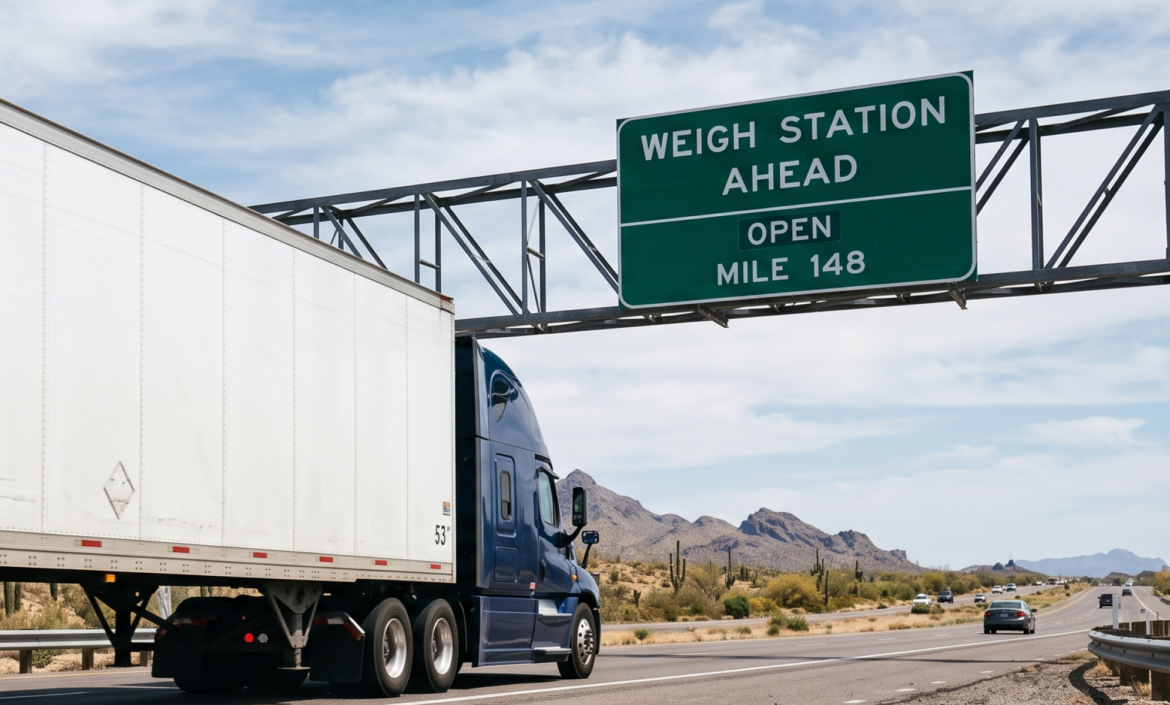
Vehicle weigh stations are a familiar part of life on the road, but for fleet managers, they represent more than a required stop along a route. They are part of the roadside enforcement system that helps agencies verify vehicle weight, inspect commercial motor vehicles, review documentation, and support safer highways.
For fleets, weigh stations can also create operational friction. A stop may be brief, or it may lead to a longer inspection that affects schedules, driver productivity, fuel use, and customer commitments. Understanding how weigh stations work, why vehicles are directed into them, and how qualified bypass programs fit into the process can help fleet managers make more informed operational decisions.
PrePass® Bypass helps pre-qualified vehicles receive bypass opportunities at participating inspection facilities through electronic screening. This helps fleets reduce unnecessary stops while supporting the broader goal of safer and more efficient highways.
What are vehicle weigh stations?
Vehicle weigh stations are roadside facilities where commercial vehicles may be directed to stop for weight checks, safety inspections, credential reviews, or other enforcement activity. They are commonly located along highways, near state lines, or in freight-heavy corridors where commercial vehicle traffic is high.
The exact process can vary by state, station, vehicle type, and enforcement priorities. In some cases, a driver may simply enter the station, pass over a scale, and return to the highway. In other cases, a vehicle may be selected for additional review or inspection.
The Federal Motor Carrier Safety Administration notes that roadside inspections can take place at weigh stations, border checkpoints, bus terminals, a carrier’s terminal, or when a law enforcement official stops a commercial motor vehicle. Roadside inspectors must also be certified under Commercial Vehicle Safety Alliance standards.
Why weigh stations matter to fleet managers.
For fleet managers, weigh stations sit at the intersection of enforcement, safety, and operations. They can influence how drivers experience the road, how routes are planned, and how consistently freight moves from origin to destination.
A weigh station stop may involve:
- Weight screening.
- Vehicle identification.
- Credential review.
- Safety checks.
- Driver documentation review.
- Inspection screening and selection.
- Enforcement action when issues are found.
Even when a stop does not result in a violation, it can add time to a trip. When multiplied across trucks, routes, and weeks of operation, those stops can become a meaningful source of delay.
This is especially important for small and midsize fleets. A single delayed truck can affect dispatch planning, driver hours, dock appointments, customer expectations, and backhaul opportunities. Fleet managers may not be able to control when a station is open or when a vehicle is selected for inspection, but they can control how prepared their operation is before a vehicle reaches the station.
The role weigh stations play in enforcement.
Weigh stations help enforcement agencies monitor commercial vehicles moving across the highway system. While weight is the most visible function, enforcement activity can extend beyond the scale.
At a weigh station, officials may review whether a vehicle is operating within applicable size and weight limits, whether required credentials and registrations are current, and whether the vehicle appears to present a safety concern. Depending on the circumstances, a vehicle may be directed for a closer inspection.
State commercial vehicle enforcement programs often include inspection, enforcement, education, and auditing tied to highway safety and applicable commercial vehicle regulations. For example, Arizona’s commercial vehicle enforcement program describes its work as promoting highway safety through auditing, education, inspection, and enforcement operations under state law, the Federal Motor Carrier Safety Regulations, and federal hazardous materials regulations.
For fleet managers, the takeaway is simple: a weigh station is not only a scale. It is a checkpoint where vehicle condition, driver readiness, and operational documentation can all come into view.
The role weigh stations play in safety checks.
Safety is one of the core reasons weigh stations exist. Commercial vehicles are large, heavy, and essential to the economy. Keeping them operating safely benefits drivers, fleets, enforcement agencies, and the traveling public.
A vehicle may be selected for inspection based on a variety of factors, including visible concerns, inspection selection systems, enforcement priorities, or random selection. During a roadside inspection, officials may check vehicle components, driver credentials, hours-of-service records, cargo securement, or other items depending on the inspection level.
Fleet managers should treat weigh station readiness as part of a broader safety culture. That means making sure drivers understand inspection expectations, vehicles are maintained, documentation is current, and recurring issues are addressed before they become roadside problems.
Preparation does not guarantee that a vehicle will avoid inspection. It does, however, help fleets approach roadside inspections with more confidence.
The operational disruption of weigh station stops.
Every weigh station stop has an operational cost. Some stops take only a few minutes. Others can take longer depending on station activity, inspection requirements, traffic volume, or the issue being reviewed.
For fleet operations, disruptions may show up as:
- Lost drive time.
- Higher fuel consumption from slowing, idling, and reentering traffic.
- Tighter delivery windows.
- More driver stress.
- Reduced schedule predictability.
- More work for dispatch when delays ripple across the day.
These disruptions are not always dramatic in the moment, but they can add up. Fleet managers are often working with narrow margins, tight appointment times, and limited flexibility. Reducing avoidable friction can make a meaningful difference in day-to-day operations.
This is where weigh station bypass technology becomes part of the conversation.
How weigh station bypass helps qualified fleets keep moving.
Weigh station bypass programs electronically screen participating, pre-qualified commercial vehicles before they reach participating inspection facilities. When a vehicle is pre-cleared or pre-qualified for bypass at a participating location, the driver can receive a bypass instruction and continue on the highway instead of pulling in.
PrePass® Bypass helps qualified commercial vehicles minimize delays and reduce unnecessary stops at participating weigh stations. PrePass reports that its bypass solution helps more than 750,000 qualified commercial vehicles stay on schedule and bypass weigh stations safely.
For fleet managers, bypass is valuable because it supports both operational efficiency and enforcement efficiency. Qualified vehicles can keep moving when allowed, while enforcement resources can remain focused on vehicles that need closer attention.
Bypass does not mean every vehicle will bypass every station. Station status, state rules, safety data, credentials, vehicle eligibility, and other factors can influence whether a driver receives a bypass or pull-in instruction. Random inspections, even for the safest of vehicles, help make bypass fair and effective for all commercial vehicles.
What fleet managers can do to improve weigh station readiness.
Fleet managers cannot eliminate every stop, but they can build practices that make stops less disruptive and help qualified vehicles make the most of bypass opportunities.
Keep vehicle and driver information current.
Accurate vehicle, driver, and account information supports smoother roadside screening and day-to-day operations. Make sure internal records, credentials, and required documentation are reviewed regularly.
Coach drivers on station procedures.
Drivers should know what to expect when approaching a weigh station, how to follow bypass or pull-in instructions, and what documents may be requested during an inspection. Drivers should also understand that they must always follow pull-in instructions, posted signs, and law enforcement directions.
Track recurring roadside issues.
Patterns matter. If the same vehicle defects, documentation gaps, or driver behaviors appear repeatedly, fleet managers should address the root cause instead of treating each event as isolated.
Maintain vehicles before problems reach the roadside.
Preventive maintenance helps fleets identify issues before they become inspection concerns. Maintenance discipline is one of the most practical ways to reduce avoidable roadside friction.
Use data to support better decisions.
Fleet managers benefit from visibility into trends. INFORM™ Safety helps fleet managers identify trends across inspections, violations, and fleet performance so they can determine where coaching, maintenance, or operational improvements may be needed.
How the PrePass Mobile App supports bypass coverage.
The PrePass Mobile App helps fleets expand bypass opportunities when used with a PrePass account. When paired with a transponder, the mobile app supports broader bypass coverage by helping drivers receive bypass instructions at both mobile-enabled weigh stations and locations that support both technologies.
For fleet managers, this means drivers are better equipped to receive timely bypass information across more participating inspection facilities. Expanding bypass coverage can help qualified fleets reduce unnecessary stops, improve operational efficiency, and keep drivers moving where bypass is available.
The mobile app complements, rather than replaces, the transponder. At locations that support both technologies, the transponder takes precedence, while the mobile app expands coverage to mobile-only sites.
Frequently asked questions.
What happens at a weigh station?
A commercial vehicle may be weighed, screened, reviewed for credentials, or selected for a safety inspection. The exact process depends on the station, state requirements, vehicle profile, and enforcement priorities.
Are weigh stations only for checking weight?
No. Weight checks are a major function, but weigh stations can also support safety inspections, driver and vehicle documentation reviews, and other enforcement activity.
Can a fleet avoid every weigh station stop?
No. Bypass programs can help qualified vehicles bypass participating locations when allowed, but they do not guarantee that every vehicle will bypass every station.
Why do some trucks get pulled into weigh stations while others bypass?
Vehicles may receive different instructions based on bypass eligibility, station rules, safety data, credentials, random selection, or enforcement priorities.
How can fleet managers reduce disruption from weigh station stops?
Fleet managers can keep records current, maintain vehicles proactively, coach drivers on inspection readiness, monitor recurring issues, and use bypass technology where available.