
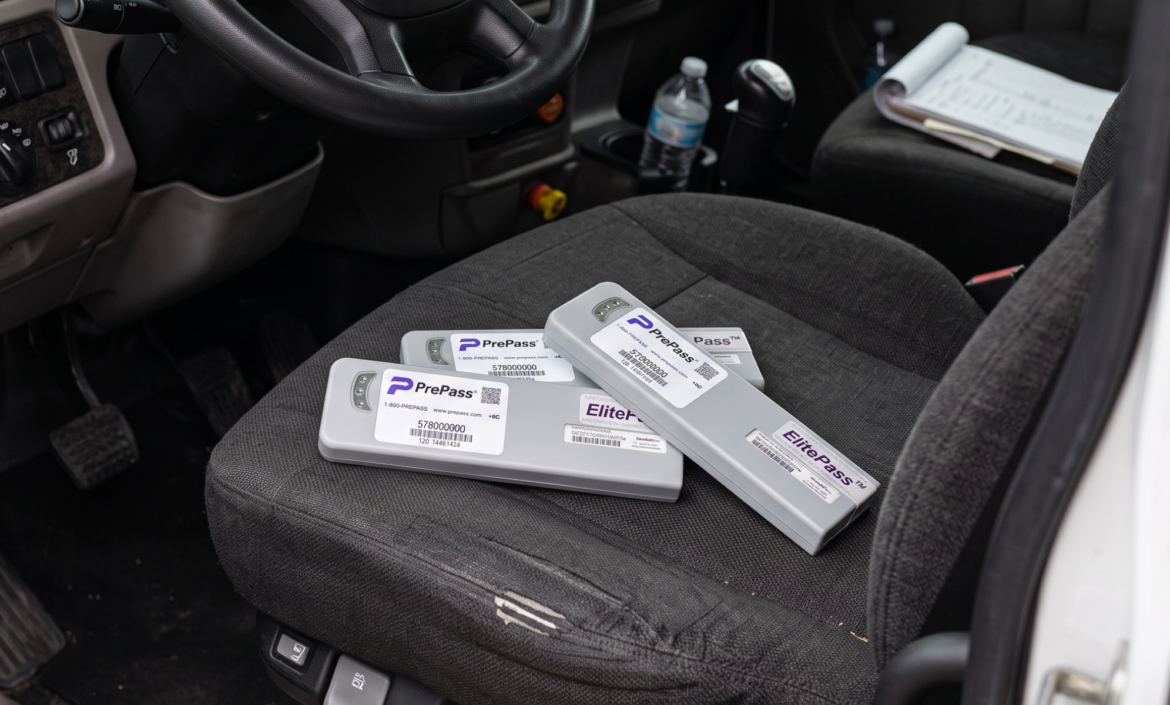
Managing toll transponders becomes more complicated as a fleet adds vehicles, changes routes and operates across more tolling regions.
Each device must be assigned to the correct vehicle, license plate, and toll account. When a truck is replaced, rented, reassigned, or removed, those records must be updated. If a transponder does not register as expected, the fleet must determine whether the issue involves the device, its placement, the account information, or the transaction itself.
That is why toll transponders should not be managed as stand-alone equipment. They should be part of a broader toll management process that connects vehicle records, regional coverage, toll activity, and back-office review.
Keep vehicle and transponder assignments accurate.
Accurate toll transponder management starts with a centralized inventory.
The fleet should be able to identify which device belongs in each vehicle without relying on driver memory, handwritten notes or disconnected spreadsheets. At a minimum, the inventory should include:
- Transponder ID.
- Vehicle or unit number.
- License plate and issuing jurisdiction.
- Vehicle class.
- Assigned toll account.
- Activation status.
- Installation date.
A documented assignment process can help prevent common issues, such as a device remaining assigned to a sold vehicle, a replacement truck operating before records are updated, or a transponder being moved without notifying the appropriate team.
Responsibility should also be clear. Depending on the fleet, transponder updates may be handled by operations, maintenance, fleet administration, accounting, or several teams working together. What matters is that each vehicle change has an owner and a defined completion step.
Drivers should also know whether they are allowed to move a device. Transfer rules vary by transponder type and toll provider. Some devices may be reassigned after the new vehicle and plate are added to the account, while others are intended to remain with one vehicle.
Review coverage when vehicles or routes change.
A toll transponder that works in one region may not provide the same coverage everywhere a fleet operates.
Coverage should be reviewed when the fleet enters a new state, adds a customer lane, opens a terminal, changes regular routes, or begins using more rental and temporary vehicles.
Before dispatching a vehicle into an unfamiliar tolling region, confirm:
- Which toll authorities operate along the route.
- Whether the current transponder is accepted.
- Whether the vehicle and plate are registered correctly.
- Whether an additional account or device is needed.
This is especially important for fleets with multiple terminals or decentralized dispatch. A local team may know that a route includes toll roads without knowing whether the assigned transponder is configured for that region.
Vehicle changes should trigger the same type of review. When a truck is added, replaced, transferred, rented or sold, toll account updates should be included in the normal onboarding or offboarding workflow.
For sold or decommissioned vehicles, remove the vehicle from the toll account and recover or deactivate the transponder before the equipment leaves fleet control. For rental vehicles, record the effective dates and confirm how the rental provider handles toll charges.
Install devices correctly and investigate missed reads.
Correct installation is an important part of transponder performance.
Placement requirements can vary by vehicle and device type, so fleets should follow the instructions provided with the device. A standard installation process should confirm that the transponder matches the assigned vehicle, is mounted in the approved location, and is active before the truck returns to service.
PrePass provides additional guidance in How to properly mount your PrePass transponder.
A missed read occurs when tolling equipment does not detect or process the device as expected. Possible causes may include:
- Incorrect placement.
- A damaged or inactive device.
- Outdated vehicle or plate information.
- An account configuration issue.
- A transaction-processing exception.
A missed read does not always mean that no transaction will be created. Some toll systems may use license plate information when a transponder is not detected.
That is why fleets should look for patterns. One plate-based transaction may be an isolated event. Repeated plate-based transactions for the same vehicle may indicate a device, installation, or account issue.
When investigating, ask:
- Was the transponder active on the date of travel?
- Was it assigned to the correct vehicle and plate?
- Was it installed according to the applicable instructions?
- Does the transaction match the vehicle’s expected route?
This process helps the fleet address the likely cause instead of repeatedly correcting individual charges.
Connect transponder management to toll reconciliation.
Even a well-managed transponder program needs regular transaction review.
Toll reconciliation helps fleets compare charges with vehicle records, operating routes, and account information. It can highlight activity associated with inactive vehicles, unexpected routes, old license plates, or repeated plate-based transactions.
Useful review categories include:
- Toll activity by vehicle.
- Transactions by toll authority or region.
- Plate-based transactions by unit.
- Charges connected to inactive or sold vehicles.
- Activity outside expected routes or dates.
- Unresolved exceptions.
The purpose is not to assume that every unusual transaction is incorrect. It is to give the fleet enough information to understand the charge, correct internal records, and determine whether further review is needed.
Fleets building a more formal toll process can also review Build a Tolling Program: Keys to Fleet Profitability and Best practices to reduce tolling costs.
Manage toll activity through a broader process.
Transponder administration becomes easier when fleet teams can review toll activity through one coordinated process instead of working across multiple accounts, invoices, and spreadsheets.
PrePass® Toll Management helps fleets manage toll payments and related administrative work. Fleets receive access to toll reporting through INFORM™ Tolling, which gives authorized users visibility into toll activity and supports transaction review.
GPS Toll Verification compares toll charges with vehicle location data to help identify transactions that may need additional review. Learn more in Gain visibility into tolling charges with GPS Toll Verification.
For fleets that also need weigh station pre-qualification, PrePass® Plus combines bypass and toll management in one solution.
The goal is not simply to keep a transponder in every vehicle. It is to build a reliable process that follows the vehicle through assignment, route changes, maintenance, replacement, and removal while giving the back office a consistent way to review toll activity.
Frequently asked questions about toll transponders.
Can a fleet move a toll transponder from one truck to another?
It depends on the device and toll provider. Some transponders may be transferred after the vehicle and license plate information are updated. Other devices are intended to remain with one vehicle. Fleets should confirm the provider’s requirements before moving a device.
Why does a toll transponder sometimes fail to read?
A transponder may not read because of incorrect placement, physical damage, inactive status, outdated account information, or another transaction-processing issue. Repeated plate-based transactions may be a reason to inspect the device and review the account.
How should fleets manage toll transponders across multiple states?
Maintain a centralized inventory, confirm regional coverage before dispatching, keep vehicle and plate information current, and review toll activity regularly. Do not assume that one transponder automatically works on every toll road.
How does toll management go beyond transponder administration?
Toll management connects devices with vehicle records, toll transactions, invoices, exceptions, and reconciliation. It gives fleet teams a structured way to manage toll activity instead of focusing only on the hardware.
Bring toll activity into a more organized process.
Managing toll transponders effectively requires more than keeping devices in vehicles. It depends on disciplined assignment practices, clear ownership, consistent installation, proactive coverage checks, and ongoing transaction review.
Fleets that treat toll activity as a coordinated process (not a series of isolated tasks) are better positioned to reduce errors, respond quickly to issues, and maintain accurate records as vehicles and routes change.