
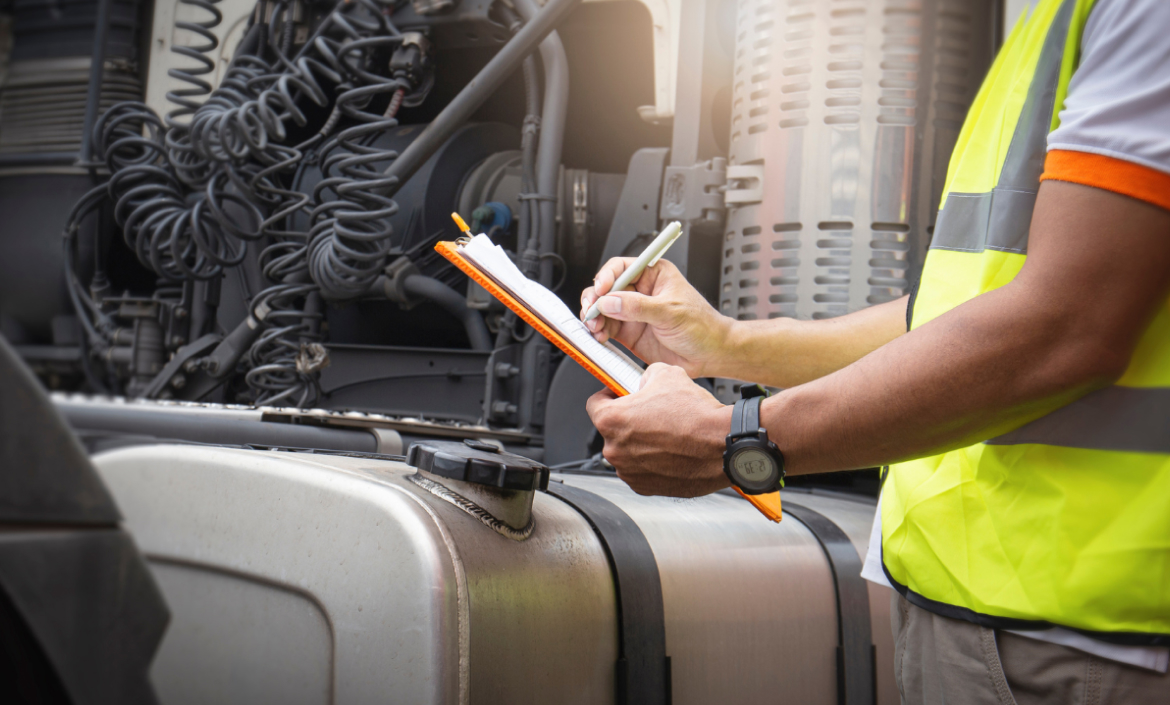
Roadside inspections conducted by the Department of Transportation (DOT) help to keep drivers, fleets, and roadways safe. During these inspections, commercial vehicles are reviewed for compliance with federal and state regulations for licensing, vehicle condition, safety equipment, and operations.
Preparing for a roadside inspection can help your fleet avoid delays, reduce the risk of violations, and make operations more efficient.
- Driver’s license.
One of the first documents requested during a roadside inspection is the driver’s license. The license is proof of identity and confirms the driver is legally qualified to operate the commercial vehicle. Drivers must carry a current license whenever they operate a commercial motor vehicle.
- Commercial driver’s license (CDL).
Drivers operating certain commercial vehicles are required to carry a valid commercial driver’s license (CDL). States issue CDLs in three classes: Class A for combination vehicles, Class B for heavy single vehicles, and Class C for vehicles carrying 16+ passengers or transporting certain hazardous materials. During a roadside inspection, drivers must present an up-to-date CDL if it’s required for their operation.
- Proof of insurance.
Commercial vehicles must carry proof of insurance. Typically, this is a certificate of insurance that confirms the vehicle meets minimum federal and state insurance requirements. The document should always remain current and accessible inside the vehicle.
- VIN plate.
The Vehicle Identification Number (VIN) plate is a unique identifier for the vehicle and needs to be clearly visible and legible. Inspectors may compare the VIN plate to the vehicle registration and title documents to confirm accuracy.
- Registration and title.
Commercial vehicle registration and title documents should be available during an inspection. These records verify vehicle ownership and confirm the vehicle is properly registered with the appropriate agencies. Current and accurate registration documents should always remain in the vehicle.
- Compliance and safety requirements.
Roadside inspections include reviewing compliance with safety standards. Inspectors may evaluate vehicle components such as lights, reflectors, and tires to confirm they meet safety requirements. Drivers may need to show safety equipment, including fire extinguishers, warning triangles, and other emergency equipment.
- Hours of Service (HOS) compliance.
Drivers have to demonstrate compliance with hours-of-service (HOS) regulations. These regulations help reduce driver fatigue by limiting driving hours and requiring appropriate rest periods. Drivers must maintain HOS records and be prepared to provide them during a roadside inspection.
Stay ready for inspection: FleetDrive 360 from PrePass.
Being ready for an inspection comes down to knowing where your records are and that they’re current. FleetDrive 360 from PrePass® is a compliance solution that helps fleets digitize compliance records, organize documentation, and stay prepared for inspections.
With better awareness of driver and vehicle compliance requirements, fleets can help to reduce paperwork, improve readiness, and keep operations safe and efficient.