
A drug and alcohol program violation can create a complex compliance workflow for a small fleet. Several parties may be involved; different steps have different reporting responsibilities, and some important records are not stored in the FMCSA Drug and Alcohol Clearinghouse.
For fleet compliance teams, the challenge is not deciding whether a driver has completed the process. That determination involves qualified professionals and required test results. The fleet’s role is to maintain visibility, complete its assigned actions, and preserve records that show how the process was managed.
Track each return-to-duty milestone.
A driver with a qualifying violation cannot perform DOT-regulated safety-sensitive functions until completing the required return-to-duty process and receiving a negative return-to-duty test result.
The general workflow includes:
- Remove the driver from safety-sensitive functions. The driver remains prohibited while the return-to-duty requirements are unresolved.
- Provide information about DOT-qualified substance abuse professionals. The driver selects and designates a substance abuse professional, commonly called an SAP.
- Monitor SAP milestones. The SAP conducts an initial evaluation, recommends education or treatment, and later determines whether the driver is eligible for return-to-duty testing.
- Arrange the return-to-duty test. The employer sends the driver for the test. An owner-operator’s designated consortium or third-party administrator, or C/TPA, handles this step.
- Report the negative test result. The employer or designated C/TPA reports the negative result in the Clearinghouse. FMCSA states that employers must report applicable return-to-duty information by the close of the third business day after receiving it.
- Administer follow-up testing. The employer must carry out the SAP’s follow-up testing plan after the driver returns to safety-sensitive work.
A shared tracker can help a lean compliance team see the current stage, responsible party, required next action, and relevant deadline without relying on memory or scattered email threads.
Keep records beyond the Clearinghouse.
The Clearinghouse provides important status and reporting information, but it is not a complete document repository for the return-to-duty workflow.
For example, the SAP’s follow-up testing plan is not included in the driver’s Clearinghouse record. When a driver changes employers before finishing that plan, the new employer must obtain the plan and continue the required testing.
A well-organized internal file may need to identify or retain, as applicable:
- The violation and removal-from-duty documentation
- The SAP referral information provided to the driver
- SAP evaluation and eligibility communications
- Education or treatment completion documentation received from the SAP
- Return-to-duty test scheduling and result records
- Clearinghouse reporting confirmation
- The confidential follow-up testing plan
- Follow-up test dates, results, and completion status
- Communications with a designated C/TPA
Access should be limited to authorized personnel, with sensitive records stored according to applicable confidentiality and retention requirements.
Build visibility without exposing confidential details.
Small fleets often have one person coordinating driver files, testing, renewals, and daily operational requests. A return-to-duty case can become difficult to manage when dates, documents, and responsibilities are spread across multiple systems.
A practical workflow separates status visibility from confidential documentation. The operational tracker can show that an action is pending or complete without displaying treatment details or other sensitive information to employees who do not need access.
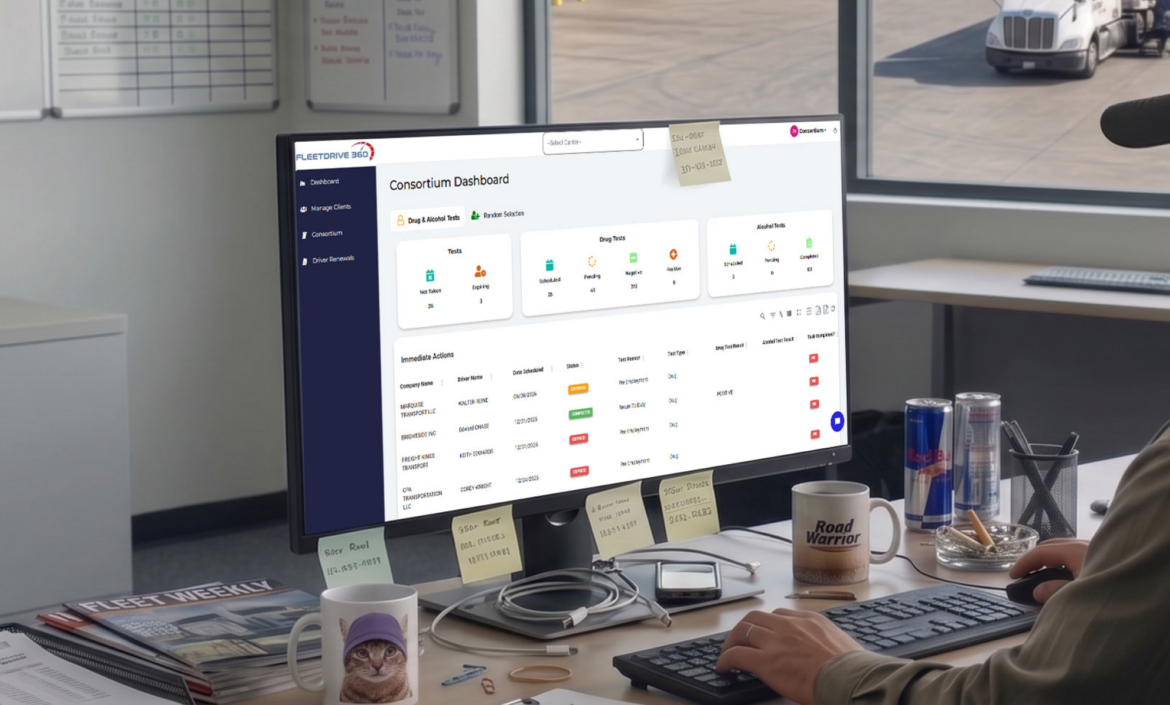
FleetDrive 360, a PrePass® Compliance solution, helps fleets centralize compliance tasks, records, deadlines, and alerts. Its drug and alcohol program management capabilities can support a more organized workflow for testing, Clearinghouse queries, reporting, and related driver records.
Centralization does not replace the employer’s responsibilities or the SAP’s professional role. It can, however, help the compliance team document ownership, identify missing actions, and retrieve supporting records more efficiently.
Prepare records that tell a clear compliance story.
Audit defensibility starts with being able to reconstruct what happened.
For each return-to-duty case, the file should help an authorized reviewer understand:
- When the fleet learned of the violation
- When the driver stopped performing safety-sensitive functions
- Which party was responsible for each step
- When required actions and reports were completed
- Whether the negative return-to-duty result was reported
- How the follow-up testing plan was administered
- Whether any responsibilities transferred to another employer or C/TPA
FMCSA notes that Clearinghouse violation information remains available for five years from the violation determination or until successful completion of the follow-up testing plan, whichever is later.
Consistent naming, dated notes, clear document ownership, and restricted access can make the record easier to review while reducing dependence on one employee’s institutional knowledge.
Frequently asked questions.
Does a negative return-to-duty test finish the entire process?
No. A negative result can change the driver’s Clearinghouse status to “not prohibited,” but the employer must still administer the SAP’s follow-up testing plan. The plan must include at least six unannounced tests during the first 12 months after the driver returns to safety-sensitive functions.
Can a fleet delegate Clearinghouse reporting to a C/TPA?
A properly designated C/TPA may assist with reporting. The employer still retains ultimate responsibility for compliance.
Is every return-to-duty document stored in the Clearinghouse?
No. Important supporting records, including the follow-up testing plan, must be managed outside the Clearinghouse.
Organize your compliance workflow with FleetDrive 360.
PrePass® Compliance helps fleets manage driver compliance records, deadlines, testing activities, and related tasks in one centralized platform. See how FleetDrive 360 can give your team clearer visibility into the work that keeps driver files organized and ready for review.